Energy Saving Guide · Your bill
Why has your bill suddenly increased? Check these 5 appliances first
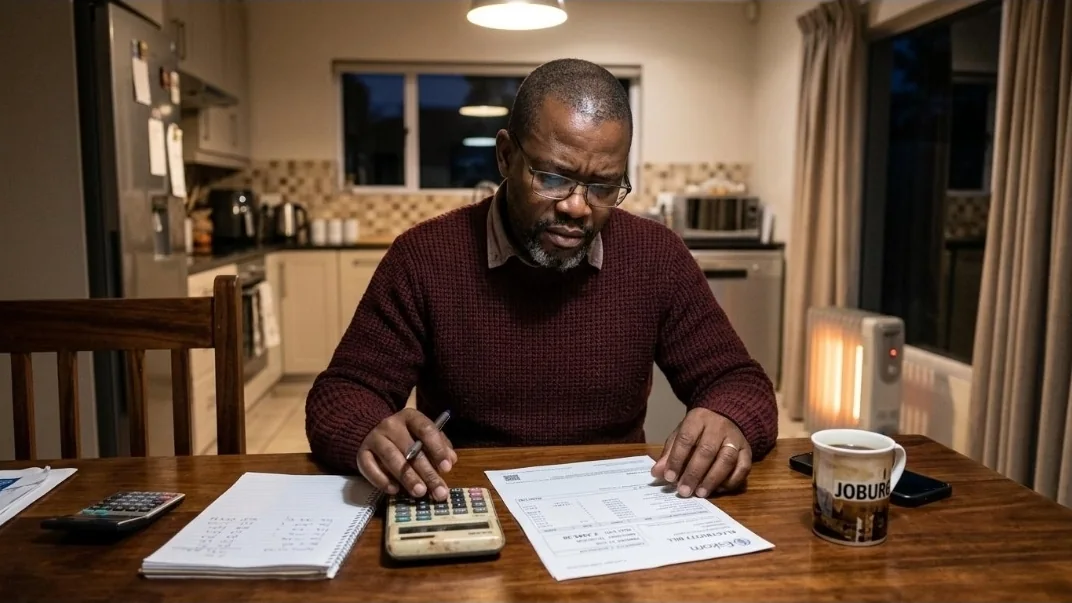
The account arrives, or the prepaid units run out mid-month, and the number is higher than you expected. You go through the house in your head and can't think of anything that changed.
A sudden jump usually has one of three causes: the price went up, you used more units, or something is faulty. Before you replace anything, work out which one it is. Your meter can tell you in a week, and it costs nothing.
First, rule out the price
If the jump showed up in July, the City's annual tariff increase may explain part of it.
City of Tshwane tariffs change every 1 July. In 2026 they went up 8.8%. At 600 units a month, that takes the bill from about R2 419 to about R2 632 including VAT, for exactly the same use.
If your bill rose by about that much, your house probably didn't change. The price did. Our tariff guide (see “Tshwane electricity tariffs: up about 10.6% a year since 2019/20”) has the full history.
Before you replace anything, work out which one it is.
If Eskom supplies you directly, Eskom's tariffs and dates apply instead. Your account or token slip will tell you who your supplier is (see “Eskom or the City: who actually supplies your electricity?”).
Then check if you're using more units
Compare units (kWh), not rand. Rand mixes your use and the price together.
Take two token slips or accounts from a month apart and compare the kWh figures. If the units went up, something in the house is using more power.
Because Tshwane's blocks step up, extra units are dear. Anything above 400 units a month costs about R4.75 a unit including VAT, and above 650 it's about R5.12.
The five usual suspects
These are the appliances that often run up a bill. "Often" isn't "always", so check before you blame one.
1. Fridge or freezer. It runs all day and night, so a tired door seal or a blocked back grille can add up quietly. Close the door on a sheet of paper: if it slides out easily, the seal may be letting cold air escape. Leave a gap behind the unit so it can breathe. (See “Your fridge never switches off”.)
2. Geyser. Eskom says heating water uses the most energy in the average household. A thermostat set higher than needed, an uninsulated tank or pipes, or a dripping hot tap all make it reheat more. A dripping hot tap is a geyser that never gets to rest. (See “Is your geyser quietly draining your budget?”.)
A dripping hot tap is a geyser that never gets to rest.
3. Pool pump. It's easy to leave on a long timer. Check how many hours it runs each day and whether that changed with the season. Don't cut it so far that the water quality suffers.
4. Old or faulty appliances. A second fridge in the garage, or a kettle or iron that trips or runs hot, deserves a look. A fault that wastes power can also be a safety risk.
5. Heaters and underfloor heating. On a Highveld winter evening these run for hours. If your bill jumped in June or July, check them alongside the tariff increase.
Find the culprit with your meter
The meter is the cheapest diagnostic tool you have. Readings beat guesses.
Read the meter last thing at night and again first thing in the morning. Overnight, most of what's running is the fridge, the freezer, the geyser and anything left on standby.
Then switch one suspect off at the plug or isolator for a night and compare. Don't switch off the fridge or freezer for long enough to spoil food.
How to turn readings into rand
Units. Units used = today's reading − yesterday's reading, in kWh. Energy (kWh) = power (kW) × hours. For example, 2 kW running for 3 hours is 6 kWh.
Rand per unit. In 2026/27, City of Tshwane's per-unit prices including 15% VAT are:
- R3.73 for the first 100 units
- R4.36 for units 101–400
- R4.75 for units 401–650
- R5.12 above 650
There is no monthly fixed charge on domestic supply, so every rand of a cut shows up in the bill.
Which rate to use. A cut comes off your top block. If you use 600 units a month, each unit saved is worth about R4.75. Cutting from 600 to 500 units saves about R475 a month including VAT.
July check. If your units are flat but the bill rose around 8.8% from July, the tariff change explains it.
Safety: don't open your geyser, distribution board or any wiring yourself. Geyser and electrical work must be done by a qualified, registered electrician or plumber.
Lesedi Energy: Smarter energy decisions start at home.
Sources (checked 16 Oct 2026)
- 2026/27 increase of 8.8% and block prices: City of Tshwane: https://www.tshwane.gov.za/?p=102188 (opens in a new tab)
- 2025/26 block prices, and no domestic fixed charge: NERSA Gauteng approved tariffs 2025/26: https://www.nersa.org.za/files/files/2025/09/GautengApprovedtariffs2025_.pdf (opens in a new tab)
- Water heating uses the most energy in the average household: Eskom, "Hot water and geyser management" factsheet (Eskom Energy Advisory Service, Nov 2020): https://www.eskom.co.za/eas/wp-content/uploads/2023/08/Hot-Water-management-Factsheet-FINAL.pdf (opens in a new tab)
- Bills at 600 units and the 600 → 500 unit saving: calculated from the two sources above (method in the box above, and in “Tshwane electricity tariffs: up about 10.6% a year since 2019/20”).