Energy Saving Guide · Lighting
Are your lights adding more than you realise?
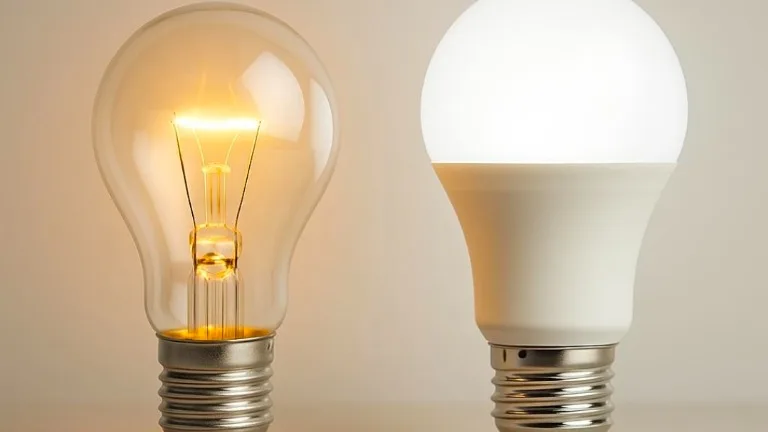
Ten downlights in the kitchen, a few in the lounge, the outside security lights all night. Each one feels tiny. Together, they're not.
A light's cost is wattage × hours, multiplied by the number of bulbs. LEDs use up to 90% less energy than incandescent bulbs. Ten 60 W incandescent or halogen-type bulbs on for 5 hours a day use about 90 kWh a month, roughly R428–R461 in Tshwane. The LED equivalent saves roughly R385–R415 of that.
One bulb is small. Ten bulbs for five hours, every night, is not.
Why lights add up
Lights are low-power, but there are a lot of them and they're on for hours. Check the wattage printed on the bulb. Old incandescent and halogen bulbs are commonly 35–60 W or more; LEDs giving similar light are a fraction of that.
What Eskom recommends
- Replace incandescent bulbs with LEDs (or CFLs).
- Switch off lights in empty rooms.
- Clean fittings and reflectors so you get more light from the same bulb.
Interesting things about lighting
- LEDs last much longer. ENERGY STAR says certified LED bulbs last about 15 times longer than incandescent bulbs.
- Security lights run the longest. A light that's on from dusk to dawn runs about 11–13 hours a night, depending on the season. A motion sensor or daylight sensor can cut that sharply.
Your outside light may be the hardest-working bulb in the house.
What fixing it could save
- Ten 60 W bulbs → LED (90% less), 5 h a day: about 81 kWh a month saved, R385–R415 a month.
- Fewer bulbs or fewer hours scale this down proportionally. If your bulbs are already LED, the saving is small; switching off still helps.
Changing downlight fittings (not just bulbs), adding sensors or rewiring is electrical work for a registered electrician. Lesedi can help with that.
How we worked out these figures
10 × 60 W = 600 W = 0.6 kW. 0.6 kW × 5 h × 30 days = 90 kWh.
LED at 90% less: 9 kWh. Saving = 81 kWh.
Which rate. A saving comes off your top block. Most Tshwane homes using more than 400 units a month pay R4.75 a unit (401–650) or R5.12 (above 650), including VAT, in 2026/27. So we show savings as a range between those two rates.
81 × R4.75 = R385; × R5.12 = R415. "Up to 90%" is ENERGY STAR's maximum; real savings depend on the bulbs replaced.
Safety: don't open your distribution board, plugs or appliance wiring yourself. Electrical work must be done by a registered electrician, who issues a Certificate of Compliance (CoC) for fixed wiring.
Want a second pair of eyes? Lesedi Energy can help you read your meter data and check the electrical side of your home safely. We measure first and recommend only what's needed. Use the contact button on this page to get in touch.
Lesedi Energy: Smarter energy decisions start at home.
Sources (checked 16 Oct 2026)
- Replace incandescent bulbs with LEDs; switch off: Eskom factsheet: https://www.eskom.co.za/eas/wp-content/uploads/2021/04/RES-FACT-SHEET-USE-ONLY-Final.pdf (opens in a new tab)
- Clean fittings and reflectors: Eskom 'Use only what you need': https://www.eskom.co.za/eas/use-only-what-you-need/ (opens in a new tab)
- LEDs use up to 90% less energy and last 15 times longer: ENERGY STAR Product-specific Savings (2021): https://www.energystar.gov/sites/default/files/asset/document/ES_Product_Savings_2021.pdf (opens in a new tab)
- Tshwane 2026/27 block rates (R4.75 for 401–650 units, R5.12 above 650, incl. VAT; City figures, gazette check pending): City of Tshwane: https://www.tshwane.gov.za/?p=102188 (opens in a new tab)
- All rand figures: calculated (method box above).